Fishing logbook guide
Bank Fishing Tips: What I Learned from a One-Hour Church Lake Trip
A short bank fishing trip at my local church lake taught me how to read wind, clouds, structure, and timing. Here's what I noticed, what I taught a friend, and why even a no-catch trip is worth logging.
Not every fishing trip needs to last all day. Sometimes you only have an hour, a couple of rods, a cooler full of snacks, and a friend who has never cast before. That was this trip.
I went to my local church lake with a friend I met through a Faith Driven Entrepreneurs group at church. We fished from a bridge that connected a smaller fountain pond to a larger lake. We had windy weather, choppy water, cloudy skies, and no fish to show for it at the end. But I still walked away having read the water, taught someone new how to cast, and noticed details worth remembering.
That is the thing about short fishing trips. They can teach you just as much as a full day session, if you pay attention.
The setup: two rods, windy weather, and a church lake
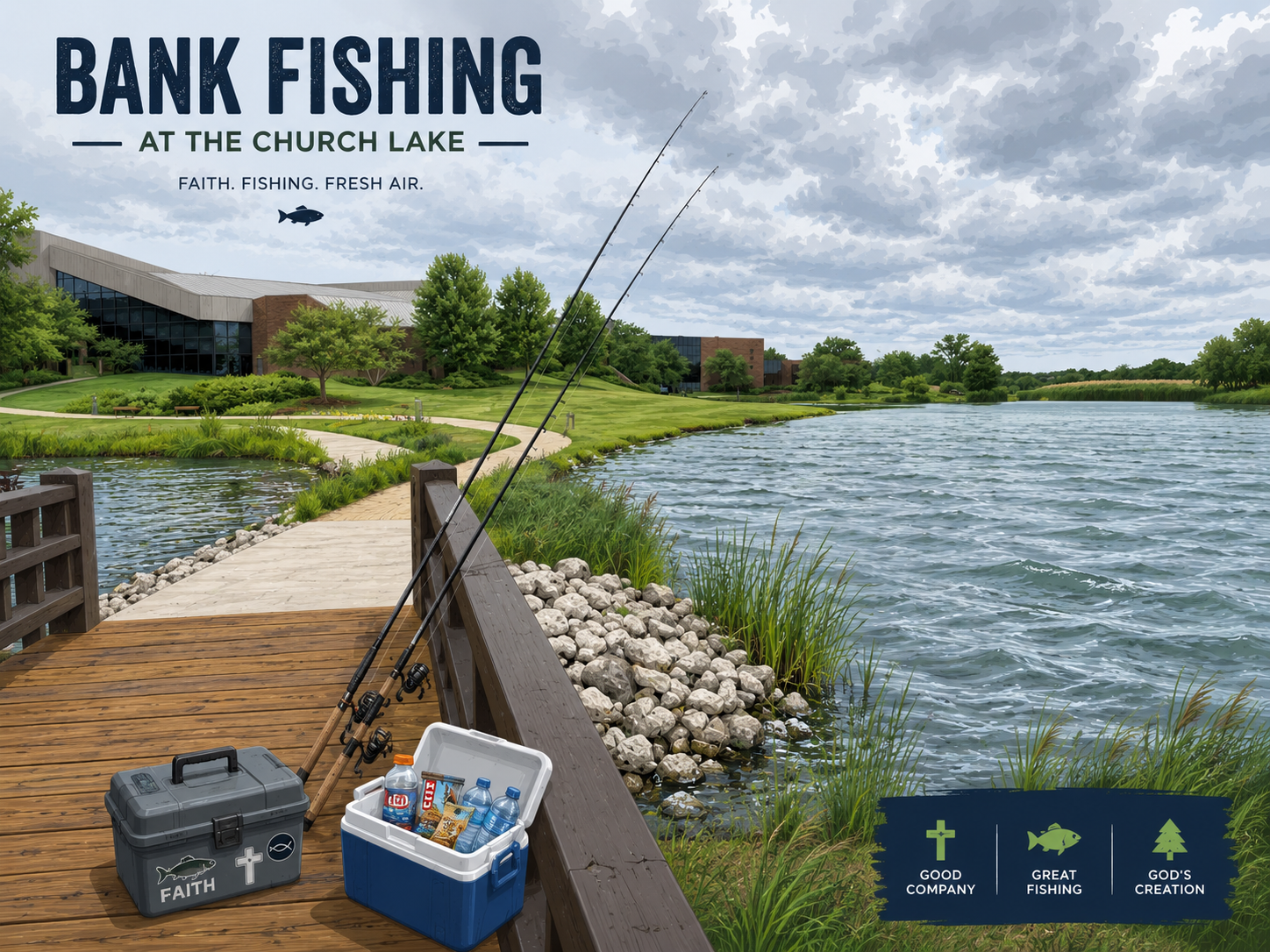
I brought two rods for the trip. The first was a catfish combo rigged with an Albright knot and a Dardevle spoon. The second was a regular spinning setup with a Senko on a 1/16 oz jig head. Because it was windy, I added a small worm weight to give the Senko a little more authority in the cast and keep it from getting pushed around.
My friend brought what she had available: little kid poles with bobbers. No hooks. She was not there to fish hardcore. She just wanted to be outside and maybe see a fish. That is a completely valid reason to go fishing.
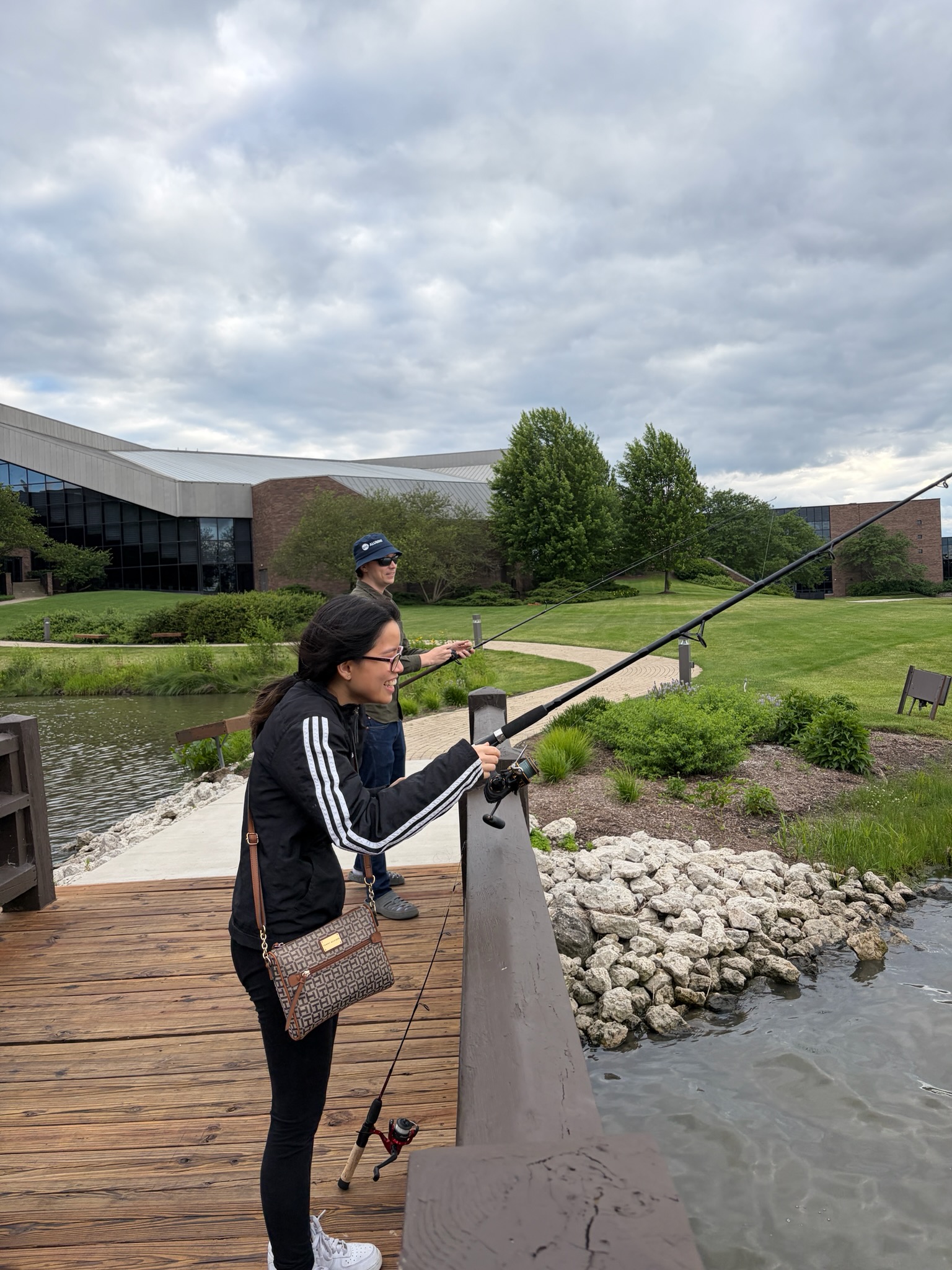
We stood on the bridge between the two water bodies and cast toward the larger lake. The wind was blowing into us, the sky was overcast, and the surface was choppy. Not textbook conditions. But worth fishing.
Teaching a friend to cast and retrieve
Before we made a single cast, I handed my friend the spinning rod and showed her the basics. How to hold the rod. Where to put her finger on the line. When to release. How to crank the retrieve.
She caught on fast. That first cast went out cleaner than most beginners manage. She asked good questions and paid attention to what she was doing. By the time we were in a rhythm, she was casting comfortably and retrieving with intention instead of just winding in as fast as possible.
She mentioned that she does not get out much and mostly wanted to see a fish. I appreciated that honesty. Not everyone fishes to check a box or come home with a cooler. Sometimes you just want the water, the air, and a little time away from a screen.
We did not catch anything that day. But she cast a real rod, worked a lure through real water, and spent an hour outside with her eyes on something other than a phone.
Reading the water from the bank
My friend asked me the question that every new angler asks: where are the fish?
I pointed out a few things.
First, there was a reed bank across the water. Bass will often wait in reeds and grass edges to ambush baitfish. If you cast parallel to the edge rather than directly into it, you can work the lure through the strike zone without hanging up in the vegetation.
Second, I pointed out an area with visible rocks and what appeared to be a harder bottom. Bass often relate to hard structure. They use rocks for ambush points, for cover, and during spawning they tend to favor harder, cleaner bottoms over soft mud. If you are bank fishing without electronics, looking for transition points between soft and hard bottom can help you narrow down where fish might be holding.
Third, I mentioned the bridge itself. Bridges create shade and current, two things that attract fish. They also provide structure above and below the waterline. We were fishing from the bridge, which is exactly the kind of feature worth noting in a fishing journal because it produces consistently across different seasons.
Why wind matters when bank fishing
The wind was strong enough to create a visible chop on the water and make casting feel like a workout. It would have been easy to use it as an excuse to leave early.
But wind is not always bad for bank fishing. When wind blows across open water, it moves surface layers of water, pushes plankton toward the bank, and can concentrate small baitfish in corners and along windblown shorelines. The food chain often follows. Where small baitfish stack up, predatory fish may not be far behind.
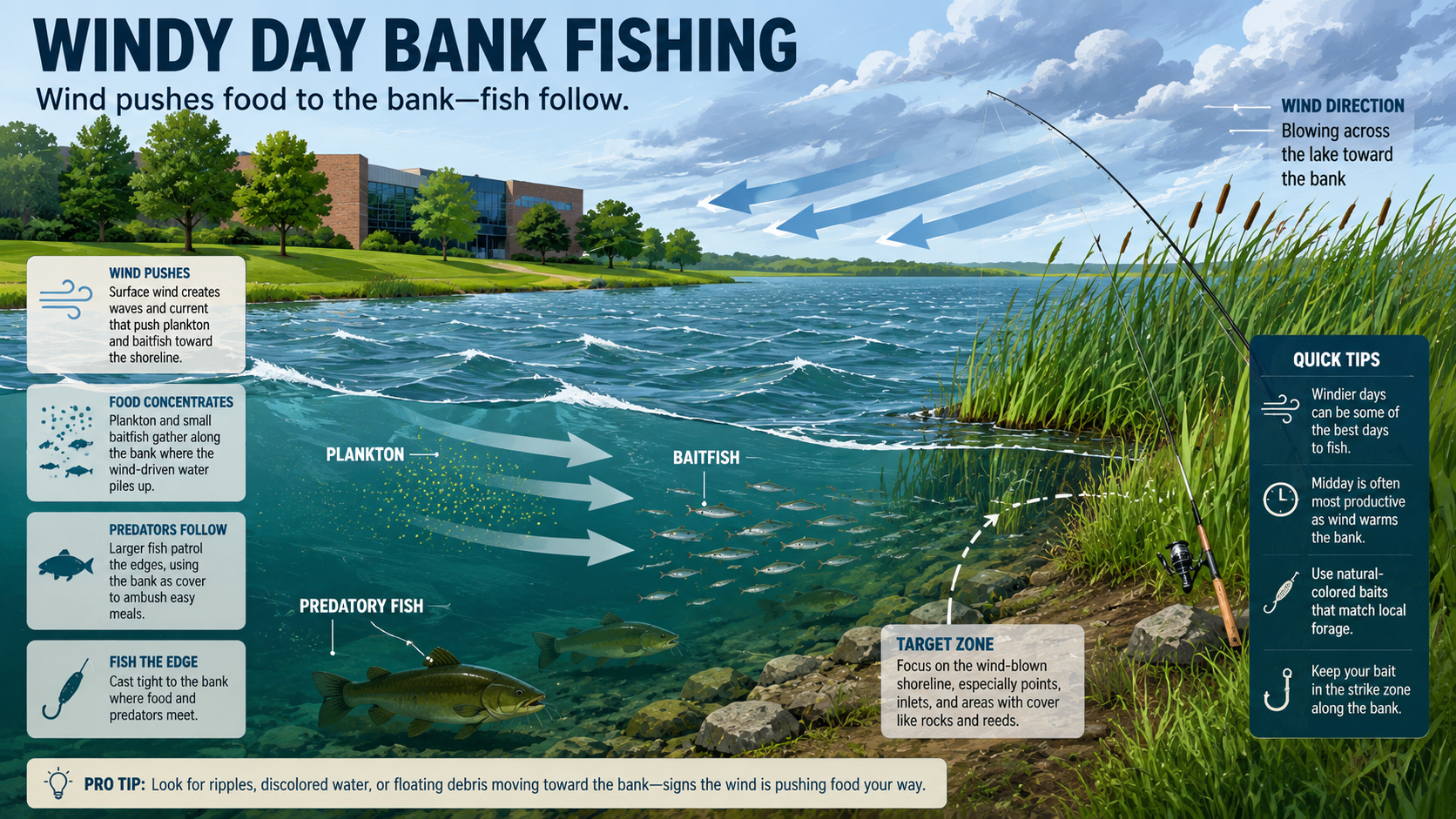
We cast into the wind rather than with it. Casting directly into wind is not comfortable, but it meant our lures were landing on the upwind side of the lake, which is often where the food is being pushed. Fishing the windblown bank is one of the most practical bank fishing tips I can offer, because the fish sometimes tell you where they are by following their food.
If you are tracking your trips in a fishing log, note the wind direction alongside your results. Over time, you may start to notice which spots fish better with a northeast wind, or which corners seem to come alive when water gets pushed into them.
Why clouds can extend the bite window
We fished before sunset, which is already a productive window for a lot of species. Sunset and sunrise are low-light periods that can trigger feeding activity because fish feel less exposed to predators and more comfortable moving in shallow water.
The clouds that day added another layer to that. On bright sunny days, certain fish, especially bass, can go deeper or tighter to cover to avoid harsh overhead light. Cloud cover can extend the window where fish feed more actively, because the reduced light makes the whole water column feel more like low light, not just the edges of the day.
Overcast conditions are not guaranteed to produce. But if you are already planning to fish near sunrise or sunset, cloudy skies can make those windows a little longer and a little more forgiving.
That combination, windy conditions pushing food toward the bank, cloud cover extending the comfortable feeding window, and the low light of pre-sunset timing, meant the conditions were not as bad as they looked. We just did not connect with fish that day.
Structure: reeds, rocks, bridges, and hard bottom
One of the most useful bank fishing habits is learning to read visible structure before you make your first cast.
From the bridge where we stood, I could see the following:
- Reed edges where bass might wait to ambush
- Rocky areas with firmer bottom
- The bridge itself, with its shade and current break
- A transition zone between the smaller fountain pond and the larger lake
Each of these features is worth noting when you fish a new spot. They tell you where to start and where to focus your casts before you work the open water in between.
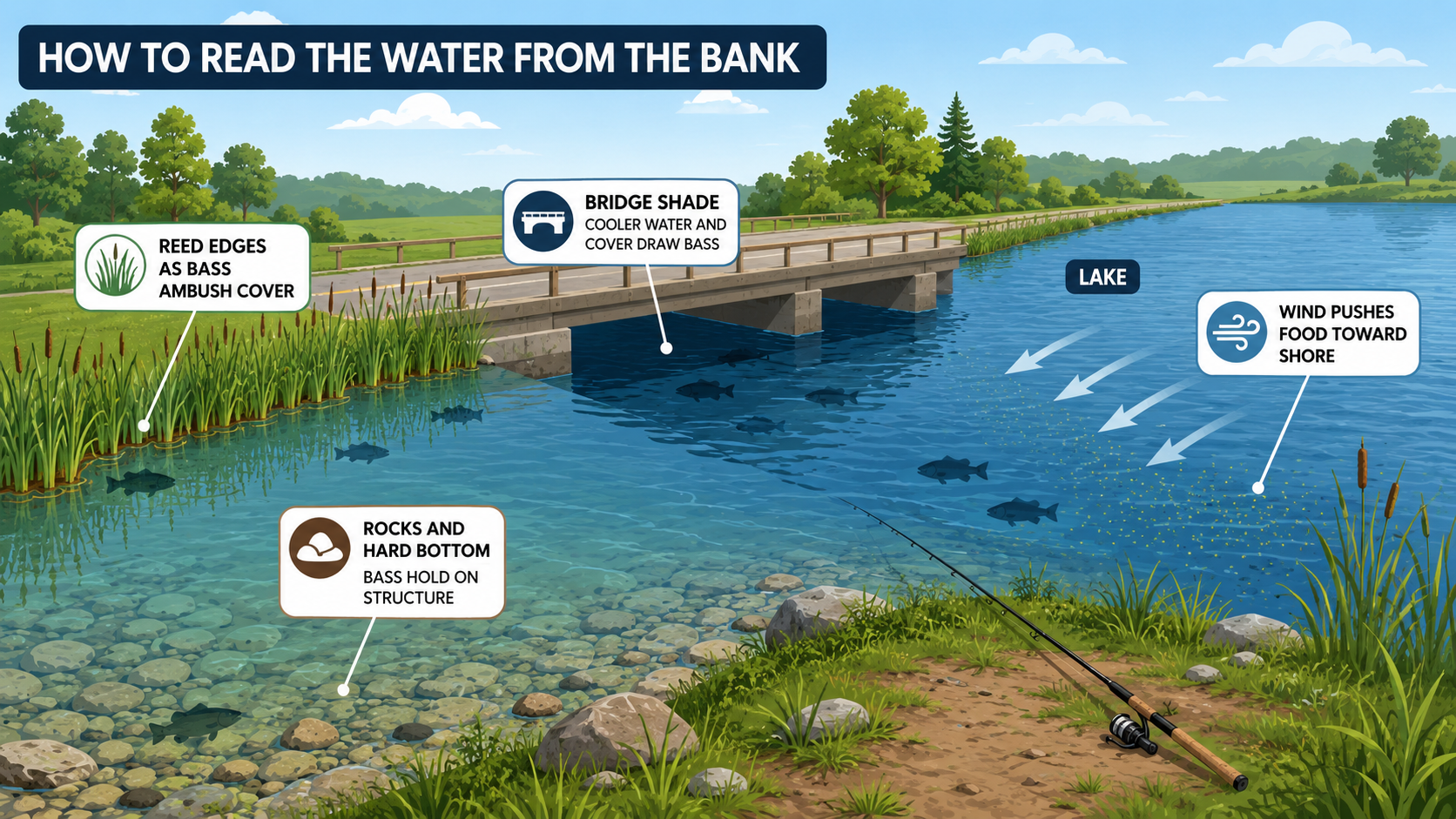
For bank fishermen without a boat, structure is your guide. You cannot follow fish across the lake with a trolling motor. You have to figure out where fish are likely to be based on what you can see from shore. Reeds, rocks, laydowns, bridge pilings, current seams, drop-offs, and hard bottom are all worth paying attention to. The more trips you fish the same water, the better your mental map becomes.
The legendary Dardevle spoon
On the catfish rod, I was throwing a classic Dardevle spoon toward the middle of the lake because it casts well in wind, flashes hard, and has the kind of wobble that can trigger reaction strikes from bass, pike, and other predatory fish. I am not sponsored by Dardevle; I just like the spoon as a classic bank-fishing lure. A lot of anglers call it a Daredevil spoon, and both names refer to the same classic lure. It is hard to overstate how effective this thing is.
The Dardevle is simple by design. It is a stamped metal spoon with a red and white finish, a single treble hook, and a weight that makes it cast a country mile. When retrieved, it wobbles and flashes through the water in a way that triggers reaction strikes from a lot of predatory species: pike, bass, walleye, perch, and trout will all hit a Dardevle. It is the kind of lure that has been around for over a century and still earns its spot in a tackle box.
I was hoping for pike that day. The lake has the kind of structure that could hold them. But nothing came after the spoon. That is fishing. You throw a proven lure in the right conditions and sometimes nothing happens. The Dardevle is still one of the best casting lures for open water, particularly on windy days when you need the weight to punch through the wind and cover water quickly.
If you have never thrown one, pick one up. They are inexpensive, durable, and effective across a lot of different fisheries.
What the previous brown bullhead taught me
A week before this trip, I fished the same church lake alone. That session went differently.
I chummed the water with sardines before I set up, then fished a sliding Carolina rig on the bottom. The chum brought fish in close, and before long I landed a brown bullhead. Not a trophy, but a real catch from a spot I had been learning.
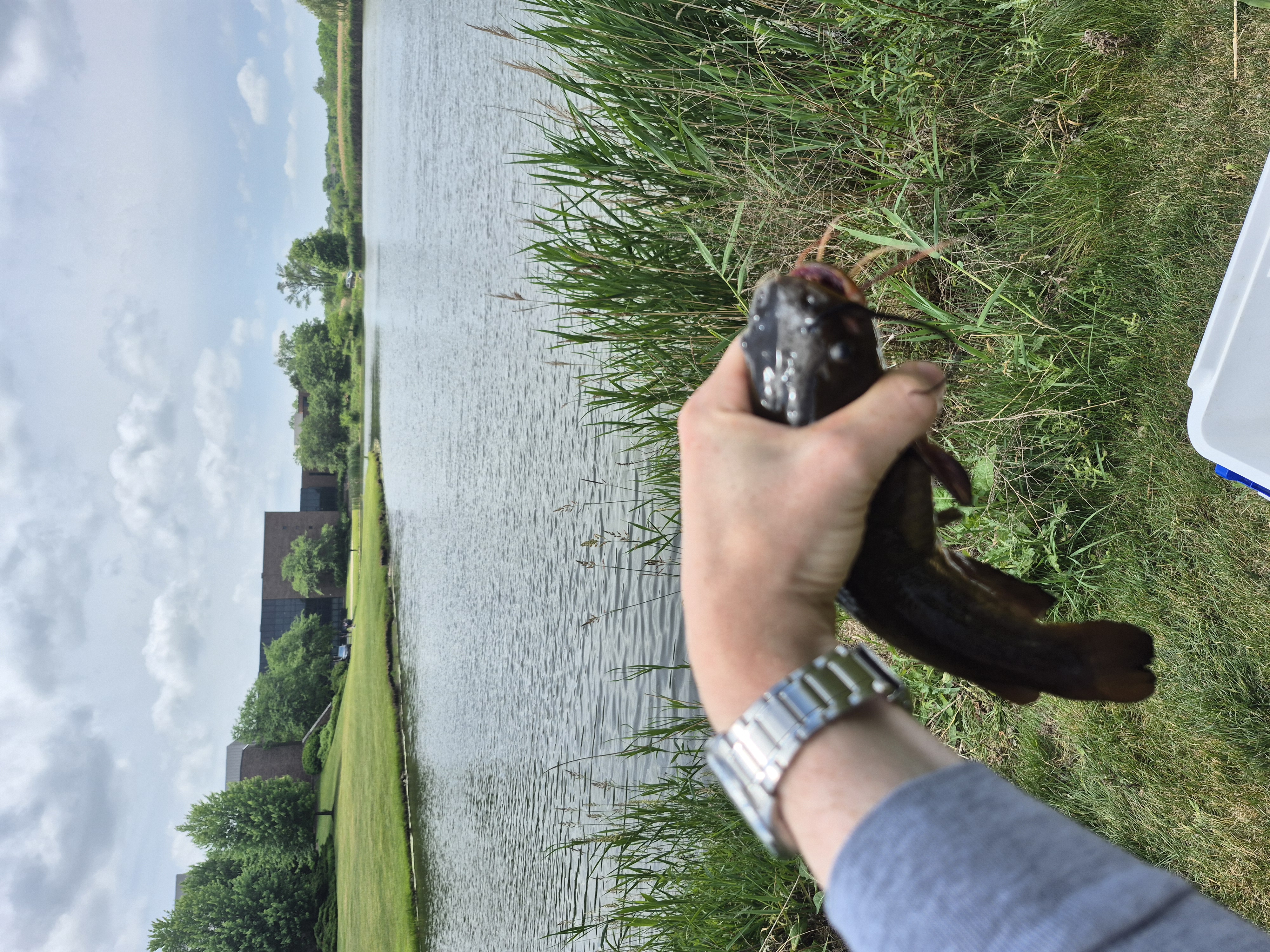
That catch is exactly the kind of entry that belongs in a fishing log.
The bait was sardines for chum and the Carolina rig for presentation. The rig was a sliding sinker setup that kept the bait on bottom without creating too much tension on the line. The location was the same church lake. The timing mattered. The technique mattered.
On the second trip, I did not chum. That is also worth noting. One session used chum and produced a fish on bottom. The next session skipped the chum, used lures, had a friend along, and produced nothing. Those two entries compared together already start to tell a story. What you track in a fishing log shapes what you learn from the water over time.
Why getting skunked is still worth logging
We did not catch anything on the church lake trip. That is fine. We were only out for about an hour.
But a no-catch trip still has information in it.
You can log what conditions did not produce: windy, choppy, overcast, pre-sunset, lures only, no chum, bridge access. You can log what you saw: reed edges, rocky structure, fish not visibly active. You can log what you tried: Dardevle spoon toward open water, Senko on light jig head along the edge. You can log what you would try next time: add chum, fish earlier in the day, try a heavier weight for better feel in the wind.
A blank day in your fishing journal is not a failed entry. It is a data point. Over time, if you see that a certain lake or a certain condition keeps producing empty sessions, that pattern tells you something too. Maybe that water fishes best after rain. Maybe the morning hours are the key. Maybe lures do not work as well as bait in that spot. You will not know until you have a few sessions logged side by side.
The best fishing log app is not one that only shows your catches. It is one that holds your whole history, slow days included, so you can learn from the full picture.
The deeper reward: friendship, faith, and time outside
My friend and I met through a Faith Driven Entrepreneurs group at church. We are both in seasons of growth, trying to discern the gifts, resources, and capital God has given us, and figuring out how to use them well in business and in service to others. That kind of conversation does not always happen at a desk.
Standing on a bridge, watching the wind move across the water, waiting for a strike that never came, there is room for the kind of conversation that actually matters. Not hurried. Not agenda-driven. Just present.
Her mom brought Chipotle. I packed a cooler full of snacks and drinks. We were well supplied for an hour of fishing that produced no fish and a lot of good conversation. I wore my gloves and kept casting. She kept asking questions and watching the water.
There is something grounding about that kind of afternoon. Fishing has a way of slowing things down without forcing you to be still. You are doing something, but you are also waiting. That combination creates space.
Not every trip needs to be about the catch. Some trips are about the person standing next to you.
What I would log in CatchLedger from this trip
If I were logging this in CatchLedger, here is what I would record:
- Date and time: Evening, pre-sunset
- Location: Church lake, bridge access between fountain pond and larger lake
- Species targeted: Bass, pike, catfish
- Species caught: None
- Rod 1: Catfish combo, Albright knot, Dardevle spoon, cast toward open water
- Rod 2: Spinning setup, Senko on 1/16 oz jig head, added worm weight for wind
- Weather: Windy, choppy surface, overcast, pre-sunset
- Water conditions: Wind-driven chop, cloudy sky, no visible fish activity
- Structure noted: Reed edge for bass ambush, rocky hard bottom, bridge shade, transition zone between ponds
- Notes: No chum this session (contrast with previous week). Friend learned to cast, handled the wind well. No strikes on either setup. Try chum next time. Return earlier or after sunset.
- Previous session comparison: Used Carolina rig and sardine chum one week prior, caught one brown bullhead
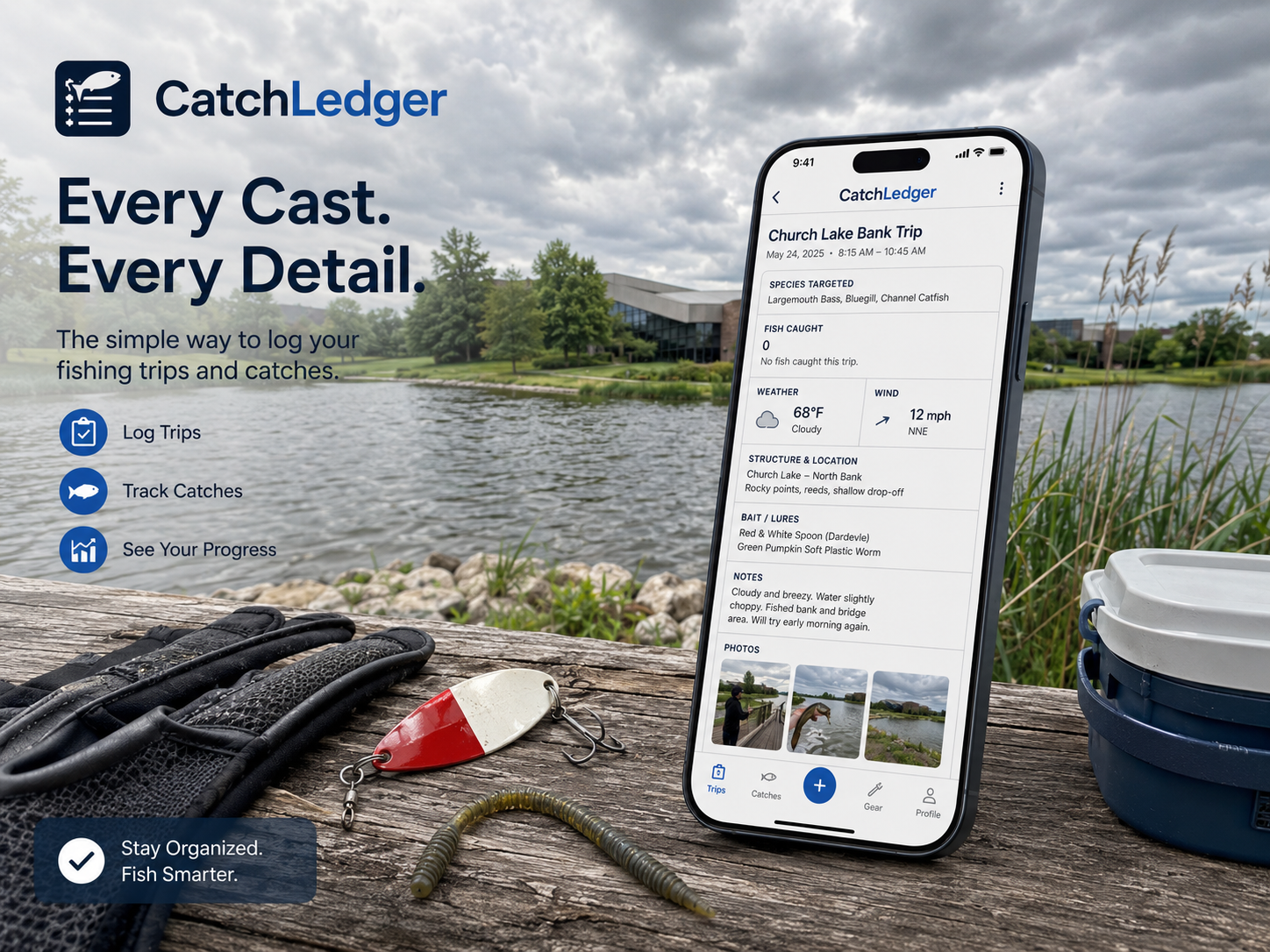
That entry takes maybe two minutes to fill in while the details are still fresh. And the next time I fish that same lake, I have a record to compare.
Conclusion
You do not need to catch fish to get something out of a fishing trip. This one gave me an hour outside, a good conversation, a student who learned to cast, and a handful of observations about structure, wind, and timing on a water I am still figuring out.
Pay attention when you fish. Notice the wind direction and where it pushes the water. Look for reed edges, hard bottom, and shade. Think about cloud cover and what it means for the bite window. Log what you tried, what you saw, and what you would do differently. Even a no-catch trip can sharpen your eye if you treat it like a lesson instead of a waste of time.
CatchLedger is a free personal fishing logbook app for iOS and Android. It helps you track catches, bait, lures, rigs, weather, water conditions, notes, and photos so every trip, including the slow ones, becomes part of your fishing history. Download it and start logging your next trip. The details you record today are the lessons you will use later.
Comments
Have a fishing log tip, bait note, or tracking habit? Share it below.